These two prints grew from the same yellow plate. They both involve experiments using paper stencils to mask off portions of the plate so that the brayer can be used to roll ink on in specific shapes.
Here are some experiments with printing on dry paper and then, without inking the plate again, printing on wet paper. Reprinting the plate without re-inking results in a "ghost" print, a faint copy of the original. Since it is so faint, I have been printing the ghost image, putting more ink on the plate to add detail, and printing that on top of the ghost. This results in the softer background tones with darker accents. The first image is a ghost print with a few added details. The next print was made on dry paper. The one following is its ghost. The two horse prints started as ghosts. The bottom print was done on dry paper.
Lots of experimentation with the press. Every print is a learning experience at this point, and it is so much fun. The leopard is silver and went through the press many times. In fact, it seemed like a failed experiment until the very last layer. The bottom image is my mom. I made it by inking the whole plate and using turpenoid to subtract the areas of the figure. This print led to the top two. This is an image of my friend Ursula's grandmother, who travelled with and performed in the circus. All are monotypes, as are the sea and landscapes below.
In addition to all the printmaking, I have been painting lots of new things. All still very much in process, especially the three large ones in the top image.
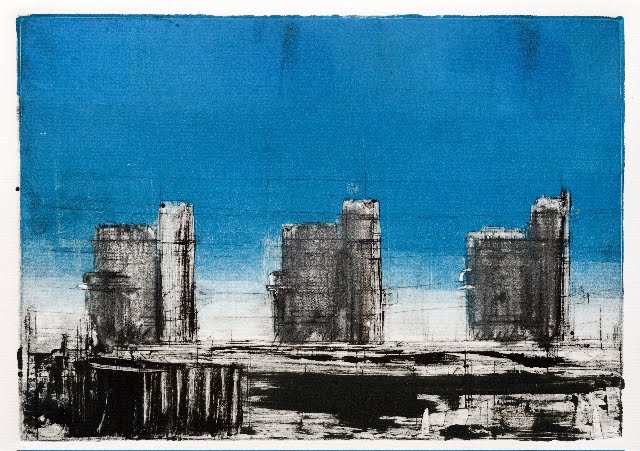
Lots of progress with the ink handling! These are all monotypes (the plate is blank except for the ink) made using a 9"x14" plexi plate. The top print was the first, and it almost did not happen. I had inked the sky intending to make a sunrise mountain landscape. Once I put on the orange color for the mountains, it became clear the image would not work. I almost scrapped the whole thing but decided not to waste all that ink. Using a brayer, I mixed the blue ank orange ink until it was smooth. This suggested a refinery image I painted a while back. After several other good ideas turned into mistakes turned into discoveries, this silver tank appeared. All four prints were run through the press twice, the second pass mostly used to add darker color and detail.
I tried using a small circular plate (4" diameter). Still learning how to render volume. Ideally, I'd like it to be a balance between the drawing and the ink.